
Mike recently joined Xtreme Polishing Systems President Chris Lavin on the XPS podcast alongside his son, Cayden, and Ryan, his full-time marketer and someone he considers part of the family. Today, Mike is the newest owner of an XPS Xpress location in Marcy, New York.
His journey into epoxy, however, started with a much simpler goal.
He wanted to add another service to his existing concrete business.
What happened next turned epoxy into the primary focus of his family-run operation and eventually led him to open his own XPS Xpress supply store.
From Concrete to Epoxy
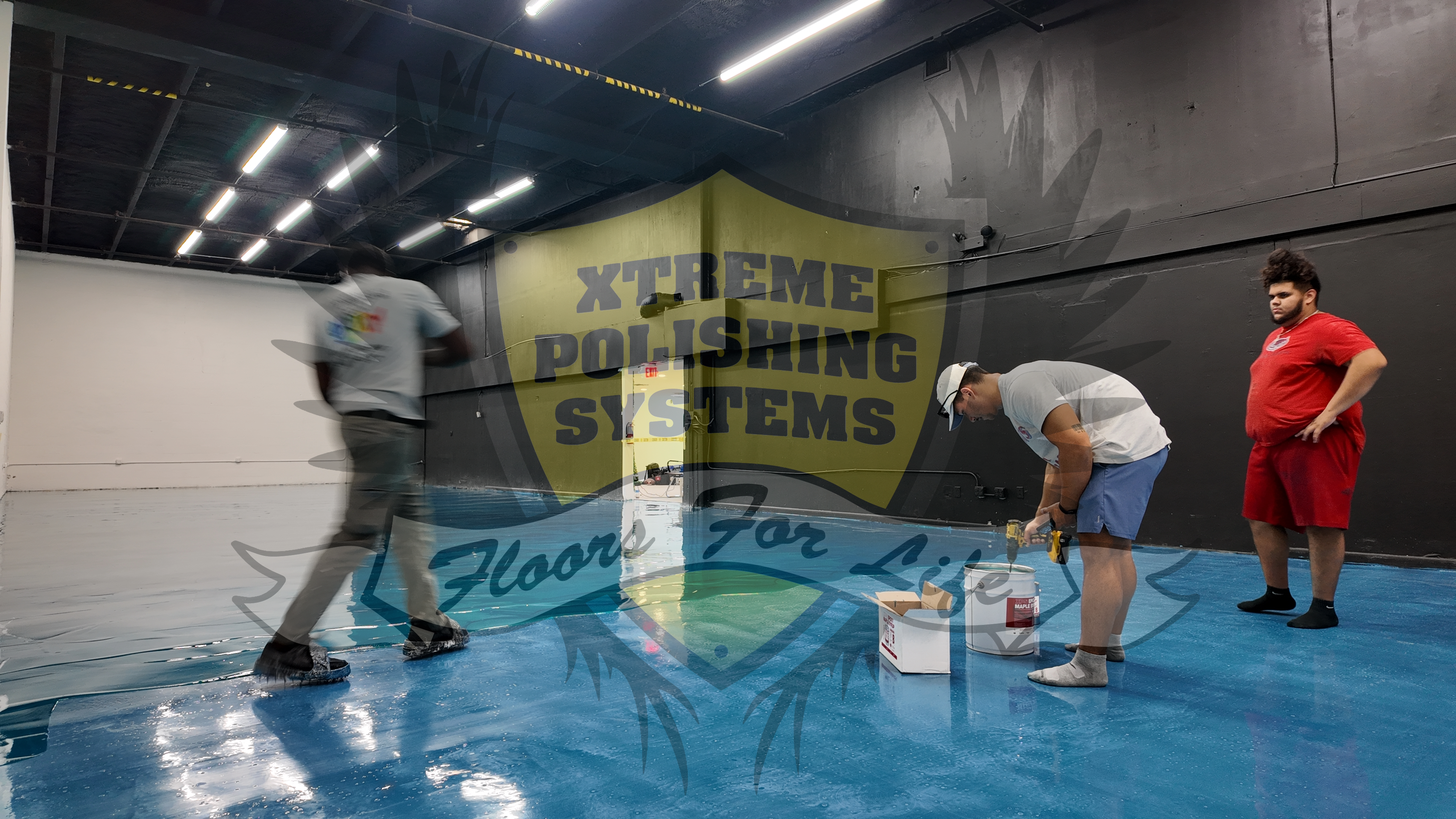
Mike already had experience working in the concrete industry when he decided to take XPS’s three-day upstate epoxy class in Garfield, New Jersey.
The goal was not to completely change his business. He simply wanted to learn another system that he could offer his customers.
After taking the class and putting his knowledge into practice, epoxy quickly became much more than an additional service.
It became the main focus of his business.
Mike began installing epoxy in 2024, and during his first year, his business generated approximately $700,000 to $800,000 in revenue from epoxy installations.
That number is impressive, but there is an important part of the story that can easily get overlooked.
The revenue did not come without work.
Success Doesn't Come Without the Work
There is a common misconception that entering the epoxy industry automatically means making significant amounts of money.
The reality is very different.
Like any skilled trade, building a successful epoxy business requires consistent effort, persistence, education, and the ability to keep improving.
Mike's experience demonstrates that opportunity and execution have to work together.
The industry can provide opportunities for contractors who develop the right skills and business systems, but there is no replacement for putting in the work.
A contractor can take a class, learn a system, and understand the fundamentals, but building a successful company still requires finding customers, completing quality work, managing employees, handling challenges, marketing the business, and continuing to improve.
For Mike, that persistence played a major role in reaching his first-year revenue numbers.
Why Hands-On Training Matters
One of the biggest lessons Mike has learned is that watching epoxy installation videos online is not enough.
Online videos can be helpful for learning terminology, seeing different applications, and getting familiar with products. But watching someone install a floor is very different from actually working with the materials yourself.
Hands-on training gives contractors the opportunity to work through the process and understand what is happening at each stage of an installation.
That includes surface preparation, mixing, application, material handling, tools, timing, and troubleshooting.
Those fundamentals become even more important when contractors begin working in different environments.
Working With Changing Climates
Mike operates his business in Marcy, New York, an area that experiences significant seasonal changes.
The region can experience extremely hot conditions during the summer and very cold conditions during the winter.
Those environmental changes can have a major impact on coating installations.
Temperature, humidity, moisture, rain, and other conditions can affect how materials behave and how contractors need to approach a project.
Understanding those variables is part of becoming a knowledgeable installer.
This is one reason practical experience is so important. Contractors need to understand not only which products to use, but also why, when, and how to use them correctly.
Train Your Entire Team
Mike takes a team-based approach to education.
When he learns a system, he also wants his team to learn it.
His son Cayden and Ryan both attended the upstate epoxy class with him. At just 17 and 18 years old, they are already developing hands-on experience in the flooring industry.
Having the entire team trained through the same process can create consistency throughout the business.
Everyone understands the same fundamentals and installation procedures. That becomes increasingly important as a contracting company grows and the owner is no longer personally handling every step of every project.
For Mike, training isn't something that ends when the class is over. It is part of building a team that can consistently perform the work.
Start Learning Early
Mike also discussed the importance of developing an entrepreneurial mindset at a young age.
His experience with Cayden and Ryan demonstrates that younger people can begin developing valuable skills and industry knowledge early.
Chris Lavin also discussed how learning a skilled trade can provide another career path for people who may be looking for alternatives to traditional education.
College can be an excellent choice for many people, but it isn't the only path toward building a career or business.
A skilled trade can provide an opportunity to learn a marketable skill, gain real-world experience, and eventually build a company.
The important distinction is that training provides the foundation. Success still requires years of applying what you learn.
The Business Side Matters
Technical installation skills are only one part of running a successful epoxy company.
Mike has also learned important lessons about managing employees, protecting cash flow, and making sure his crews follow proper procedures.
One of his biggest jobsite challenges has been managing workers and making sure materials are mixed and handled correctly.
As a company grows, the owner has to trust other people to perform the work. That makes training, communication, and consistent processes increasingly important.
A business owner can have excellent installation skills, but if the team isn't following the same procedures, maintaining quality becomes much more difficult.
Get Your Deposit Before You Start The Job
Mike also shared an important business lesson that every contractor should pay attention to.
Get a deposit before starting the job.
Taking a deposit can help contractors cover material costs, protect cash flow, and reduce the financial risk of starting a project without receiving payment.
For a growing epoxy company, cash flow can make a major difference.
Contractors are responsible for materials, labor, equipment, transportation, and other project expenses before the final payment is collected.
Having a clear payment structure in place before work begins can help protect the business and make managing projects easier.
Expanding Beyond Epoxy With STARDEK
Mike's continued focus on education also led him to explore STARDEK.
STARDEK is a cementitious coating system designed for exterior concrete applications, including pool decks, patios, walkways, and commercial spaces.
Mike sees STARDEK as a strong option for outdoor applications and has already been working on multiple STARDEK projects totaling approximately 4,000 square feet.
For contractors, adding another system can create opportunities to take on different types of projects.
Instead of limiting the business to one type of flooring system, contractors can develop additional capabilities and provide customers with more solutions.
For Mike, continuing to learn new systems is another part of continuing to grow.
From Contractor to XPS Xpress Owner
Mike's success as a contractor eventually created another opportunity.
In March 2026, he became the newest owner of an XPS Xpress location in Marcy, New York.
The transition gave him the opportunity to expand from installing flooring to supplying products and solutions to other contractors in his market.
His experience as a contractor gives him a unique perspective when working with other installers.
He understands the products contractors need, the challenges they face, and the importance of having access to the right materials and equipment.
The store has also created additional opportunities to connect with contractors in the area.
How Marketing Helped Grow the Store
Mike has used several strategies to bring attention to his XPS Xpress location.
One of the biggest advantages is the natural curiosity of contractors in the surrounding area.
Contractors who discover the store may come in looking for products, equipment, or advice, which can create opportunities to build relationships and connect with potential customers.
Social media and digital marketing have also played a significant role.
For a local supply business, having a strong presence online can help contractors discover the store before they ever walk through the door.
That combination of local relationships and marketing has helped Mike build awareness for the new location.
The Biggest Challenge Contractors Face
Despite his success, Mike continues to face challenges in the contracting business.
One of the biggest is dealing with environmental conditions.
Humidity, rain, sunlight, temperature changes, and chemicals can all affect flooring and coating installations.
These challenges are particularly important when working across different seasons or outdoor environments.
Knowing how to identify and respond to those conditions is another reason contractors need more than basic product knowledge.
The more experience a contractor develops, the better equipped they become to recognize potential problems before they turn into expensive mistakes.
Lessons From Mike's Journey
Mike's story offers several lessons for contractors looking to enter or grow within the epoxy industry.
1. Don't rely on trial and error
Mistakes can cost contractors time, materials, labor, and customer relationships. Learning from experienced professionals can help reduce unnecessary mistakes.
2. Get hands-on experience
Watching videos is helpful, but hands-on training provides an entirely different level of understanding.
3. Keep learning
The flooring industry continues to evolve. Adding new systems and expanding your knowledge can create additional opportunities.
4. Train your team
When everyone understands the same processes, it becomes easier to maintain consistency as the business grows.
5. Protect your business financially
Payment structures, deposits, cash flow, and project management are essential parts of running a successful contracting company.
6. Put in the work
There is no substitute for persistence. Building a profitable contracting business takes time, effort, and consistency.
7. Build relationships
Customers, contractors, suppliers, employees, mentors, and other industry professionals can all become valuable parts of a growing business network.
What Is Your Biggest Contracting Challenge?
Chris has one question for contractors watching the episode:
What is the biggest challenge you currently face in your contracting business?
Leave your answer in the comments.
Mike will personally select a winner and provide a phone call to discuss a potential solution to their challenge.
And there is more.
The winner will also receive an XPS merchandise bundle.
Whether you're struggling with jobsite conditions, finding customers, managing crews, choosing products, or growing your business, this is an opportunity to get advice directly from someone who has experienced many of the same challenges.
Watch the Full Episode on YouTube
Mike's journey from concrete contractor to epoxy business owner and, eventually, XPS Xpress owner demonstrates what can happen when hands-on education, persistence, and business execution come together.
It took education, hard work, marketing, team development, continued learning, and the willingness to keep moving forward.
Watch the full XPS podcast episode to hear more about Mike's journey, his approach to building his team, the challenges he's faced in the field, his experience with STARDEK, and what led him to his next step as an XPS Xpress owner.